












Soho George - The Living Legend
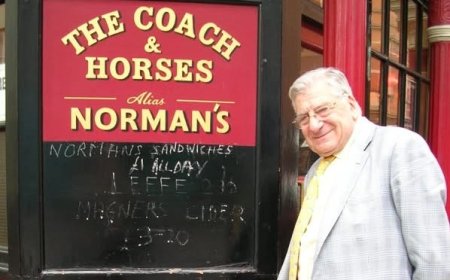
Soho George is a legend, an “institution” walking around. He’s been one of those figures you might see in passing in Soho, dressed immaculately, with his bespoke suits, hats, the kind of presence that makes you do a double-take.

George, full name George Skeggs, isn’t a bar, a club or a restaurant. He’s a person, an “institution” walking around. He’s been one of those figures you might see in passing in Soho, dressed immaculately, with his bespoke suits, hats, the kind of presence that makes you do a double-take. According to interviews, he first drifted into Soho in the 1950s, drawn by the music (skiffle, rock’n’roll) and the bohemian energy.
These days, people recognise him, and they stop to say hello. He seems almost inseparable from the cobbles, the cafés, the dimly lit corners of Soho. There’s an aura of timelessness to him — he always looks like he stepped out of a different era, in the best way. The kind of style and composure that isn’t trying to keep up with the trends; it is a trend.
Part of what makes George fascinating is his relationship with the people around him and with the place itself. He knows Soho in its many moods — when it felt raw, when it felt rebellious, when it felt alive in ways that felt risky. He’s shown up at café tables, gallery openings, vintage shops, bars. Bar Italia seems to be a favourite spot. He has been known for greeting familiar faces, chatting with people who mostly know him by sight, if not by name. There’s warmth in it. People like him because he seems to embody what Soho used to be — free, unpolished, creative.
George doesn’t always make headlines, but when he does, it’s because he’s become something larger than any one person could plan. He walks, he listens, he carries history in his posture and in his stories. Interviewers have remarked how his memory stretches back — long ago gigs, names of musicians, shops that used to be there, the shifting texture of the streets. He seems to stand at the intersection of past and present, a living archive.
There’s also an element of mystery. George isn’t always visible. Some days he’s gone. Some weeks you don’t spot him. But whenever he appears, it's noticeable — he’s dressed well, deliberately, not flamboyantly, more like someone who believes that how you show up matters. People wonder what his days are like away from the public eye. Does he still frequent the places he used to? Has Soho changed in ways that he’s sad about? There are hints in interviews that yes, Soho has shifted — the rents, the pressure on independent shops, the late-nights becoming harder. George sees that.
In that sense, George is more than a quirky local: he’s a barometer. When someone like him feels less at home, it tends to mean more has changed than just what’s on the windows. There’s something human in that. He’s visible proof of the tension between heritage and development, between nostalgia and inevitability. And he also seems to suggest that no matter how much changes, some fragments remain — the café tables, the conversations, the people who wander through Soho at 2am and feel like they might find something unexpected.
So, when you walk through Soho, keep an eye out. If you see a man in sharp tailoring, hat tilted just so, stopping to peer into a gallery or adjusting a lapel flower, that might be Soho George. He’s not just a character, he’s part of the atmosphere. He reminds you that a place isn’t just its buildings and shops; it’s also the people with a memory long enough to span decades, the kind of people who anchor places to their histories.