








Soho Radio - The Voice of the Community
Soho Radio feels like one of those rare things that belongs so much to its street, its people, its little eccentric corner of London that when you tune in, you aren’t just listening to a station—you’re stepping into a Soho night-walk in your headphones. It’s been doing that since about 2014, when a few friends—among them Adrian Meehan, Finlay Morton and Dan Gray—started it up, wanting something more alive than the polished, committee-ruled radio they felt was everywhere else.

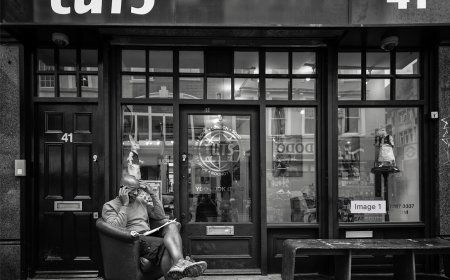
At first, Soho Radio was pretty grassroots: a street-side studio on Great Windmill Street, with glass-fronted windows so people walking by could peek in and see DJs spinning, talking, creating. There was a small shop-front element too; pop-ups, residencies, things that made the place feel porous—that people outside could feel drawn in. Over time, they expanded, opening a second London studio (on Broadwick Street) and even launching in New York (Rockefeller Centre) in 2020.
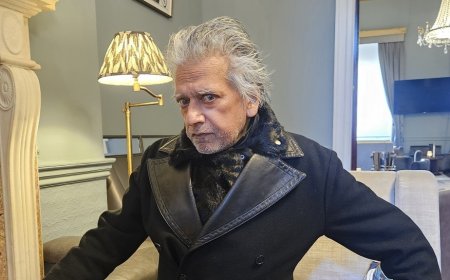
What makes Soho Radio especially rooted in its identity is that there’s no rigid playlist controlling what gets aired. Presenters are given freedom: whatever mood they want to set, whatever angle they want to explore. It’s unpredictable. One show might explore ambient sounds with whispered fragments, another might pull in dub, psychedelia, rockabilly, soul. You might hear interviews, experimental music, satire, or a show hosted by folks who are legends in their scene—Norman Jay MBE, Dennis Bovell, James Lavelle, for example.
It’s also become a kind of hub. Not just for music fans, but for artists, filmmakers, poets, DJs—people who want to experiment or share something that doesn’t quite fit “mainstream.” It does podcasts, live sessions, interviews, events, and it’s especially recognised for helping voices that might otherwise be marginalised. It speaks both locally—to Soho and London—and globally, using online streaming so it isn’t bounded by geography.
A key piece of what gives Soho Radio its institutional feel is its connection to the very texture of Soho: the noise, the walk-ups, the diversity, the rough edges. Walking past its street-level studio on Great Windmill Street or Broadwick, you see DJs through windows, hear music spill out. It’s visible, audible, part of the streetscape. It doesn’t feel like a polished broadcast tower hidden somewhere—there’s an openness to it.
Then there are the community and cultural commitments. They run grants for independent radio stations and record stores to boost inclusivity. They promote diverse voices. There are shows dedicated to women, non-binary DJs, experimental genres, lesser-known artists. Soho Radio doesn’t pretend that culture is evenly represented; it often seems to lean into what’s under the radar.
In 2024, a notable moment came when Viral Tribe Entertainment acquired Soho Radio and its podcast branch (SRP Studios). That move felt like a recognition: this wasn’t just a cute indie project, but a serious cultural platform. People noticed. Listeners, artists, and critics all seem to agree that Soho Radio has matured without losing its edge.
So why does it feel so beloved, so local, yet so far-reaching? Because Soho Radio holds its contradictions well. It’s intimate and noisy. It’s experimental but professional. It’s rooted in Soho’s street-corners and neon, but also reaches people far-beyond London through internet connections. It carries history and yet is always asking what’s next. It isn’t perfect, and sometimes you catch it chasing sound-quality issues or financial challenges (which any independent media has to), but it never feels like it’s trying to be something else than what it is.
In the end, calling Soho Radio a “local institution” isn’t overstatement. It’s become part of how people imagine Soho today: loud, curious, inclusive, artistically hungry, defiant in small ways. When you open their stream, you listen with the sense that Soho isn’t just a place—it’s a state of mind, and here’s someone broadcasting it.