








Slow but Sure: Carl Portman MBE Brings Chess to Greek Street
London's oldest French restaurant has become a favourite haunt of the Howard Staunton Society – and on 9th September it gave a warm Soho welcome to an evening about chess in the unlikeliest of rooms.
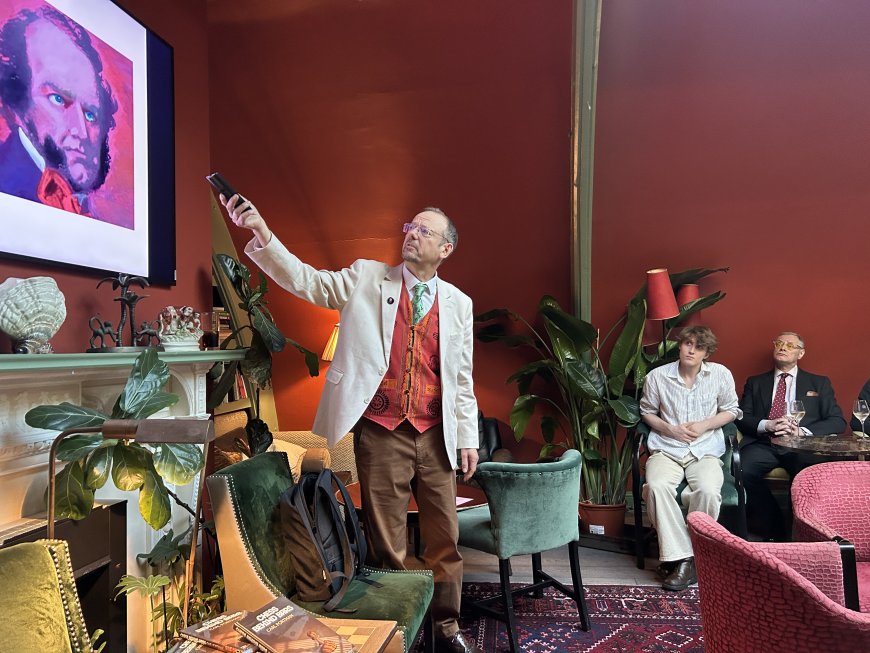
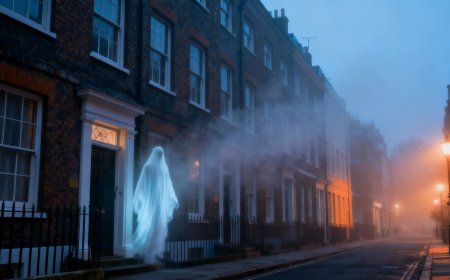
Look at the green railings outside 48 Greek Street and you will find a golden snail, and above it a plaster bust of a Frenchman riding another, bearing the motto "slow but sure". Monsieur Gaudin opened his snail restaurant at this address in 1927 – the business itself dates to 1896, making L'Escargot the oldest French restaurant in London – in a Georgian townhouse of 1741. Back then, Soho was hunting country and took its name from a huntsman's cry. On 9th September its bar and the old dining room turned their attention from snails to the sixty-four squares, as the Howard Staunton Society gathered there to welcome Carl Portman MBE.
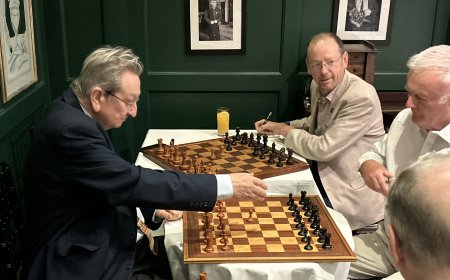
L'Escargot has become something of a clubhouse for the Society. The room has hosted its annual dinner and, this summer, its World Chess Day celebration with Grandmaster Ray Keene OBE; the snail and the chessman, it turns out, keep good company. There is a fitness to it. Soho has always been a quarter of cafés and characters, of people bent over a board or a game of something into the small hours, and a society that carries the name of Howard Staunton – the Victorian who did more than most to make London a capital of the game – could hardly have chosen a more Soho home.
The menu was the work of Brian Clivaz, one of the founders of the Staunton Society and the chairman of L'Escargot, who gave the capital's oldest French restaurant a defiantly British bill of fare: an artichoke and truffle soup to begin, then a classic Lancashire hotpot with carrots and swede, and, to finish, spotted dick and custard – homely comfort suited to a night about second chances. At £75 a head the ticket took in everything – the talk, the three courses, wines, service and VAT – with £15 from every seat going to the Howard Staunton Society in support of its work.
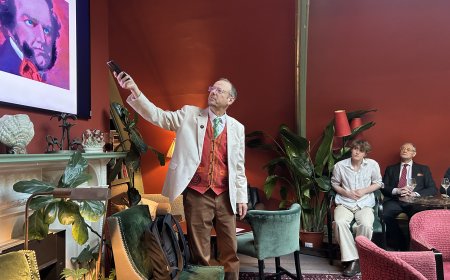
The guest was worth the welcome. Carl Portman is, by fierce preference, an amateur – a self-described "back street Brummie" and club player who has nonetheless faced Anatoly Karpov, captained England at the NATO championships and won the UK Armed Forces veteran title. The MBE he wears, though, was given for none of those things, but for more than a decade taking chess into the nation's prisons – the "longest tour in history", as he calls it. His talk carried a deliberately blunt title, "Chess in Prisons: And Why It Matters", and those last four words were the whole point.
He made his case not with figures but with voices – the thousands of letters prisoners have sent him over the years. One wrote that "chess keeps me sane in an insane place"; another, with disarming candour, that the game "probably kept me from suicide". A man on remand built himself a magnetic board and taught his young son to play down the telephone, recovering a closeness he had thought gone. What lingered longest, though, was the sheer ingenuity of the deprived: denied sets, prisoners make their own – pieces moulded from cardboard and toothpaste and left overnight to dry, kings whittled from matchsticks over two patient years, boards inked on the backs of menu sheets, pawns rolled from toilet paper and called move by move down a landing so a neighbour can follow the game on his own. People will build from nothing, Portman observed, the very thing the system declines to give them.
He is no soft touch – "a hard-liner", he says, who holds that if you do the crime you do the time – and yet he has watched the game teach what no course can. The most volatile man on a wing loses a piece, clenches his fists, and slowly learns he cannot pin the blunder on anyone else; week upon week, the tantrums fade. On wings where Vietnamese, Albanian and Romanian men share no common language, he has seen them become friends, in one prisoner's phrase, "without even saying a single word – except for checkmate". And there are triumphs: in 2022 he took a squad from HMP Hewell, some of them labelled hard to manage, into the World online prison championship in a matter of weeks, and they drew their match with Germany. Every one of them, he noted, could now say he had represented his country.
It made, in the end, for an evening about second chances and the strange reach of an ancient game – fitting fare for a neighbourhood that has always kept a chair for the outsider and the seeker. Portman closed where chess itself does, with the motto of its world federation: Gens una sumus. We are one people. The snail on the railings outside, slow but sure, might have nodded along.
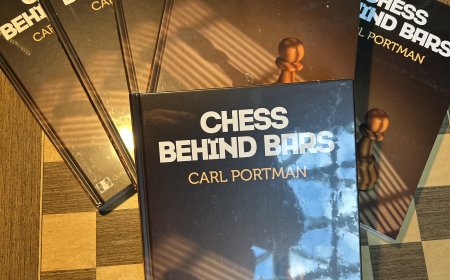
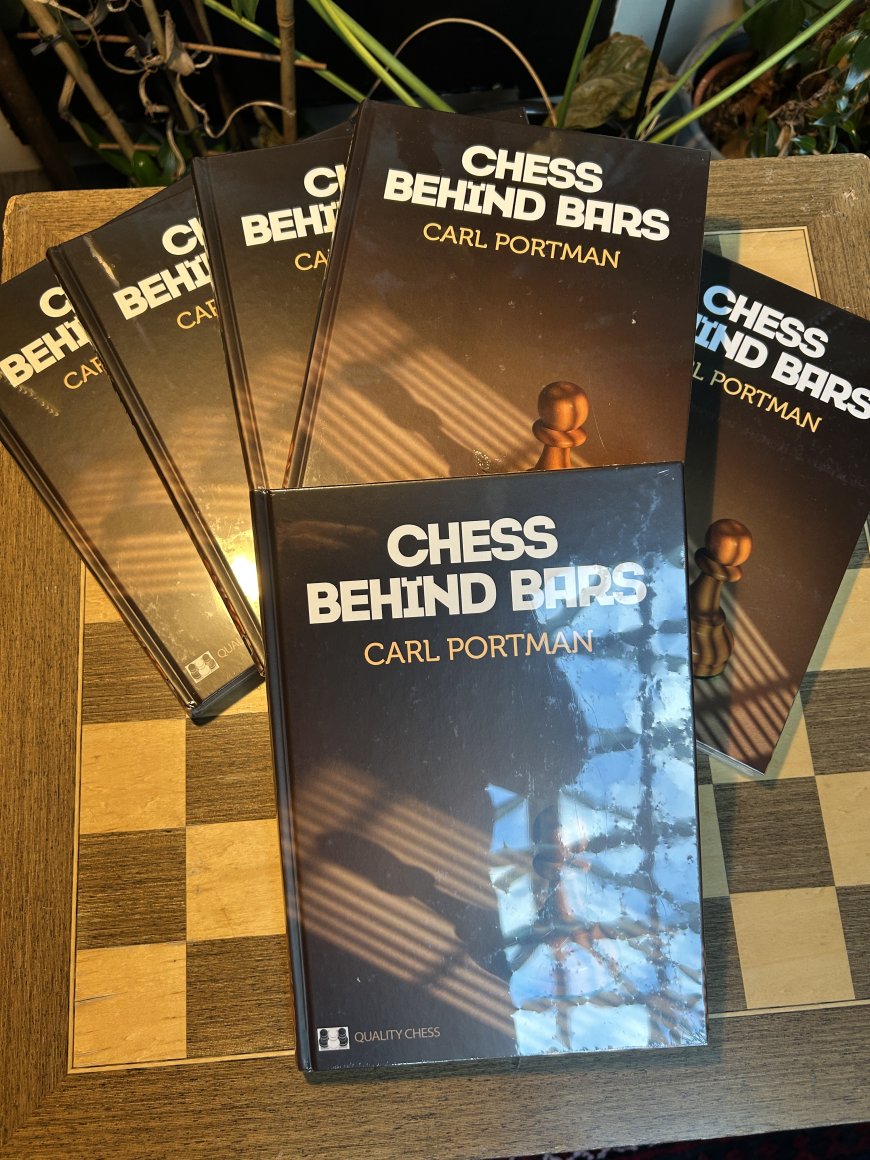
Carl Portman MBE spoke on "Chess in Prisons: And Why It Matters" for the Howard Staunton Society at L'Escargot, 48 Greek Street, Soho, on 9th September, and signed copies of his book Chess Behind Bars. Details of forthcoming Society events at stauntonsociety.com/events.