








Norman Balon: Saying Goodbye to a Soho Original
The death of Norman Balon at the age of 99 marks the end of a remarkable chapter in the history of Soho.
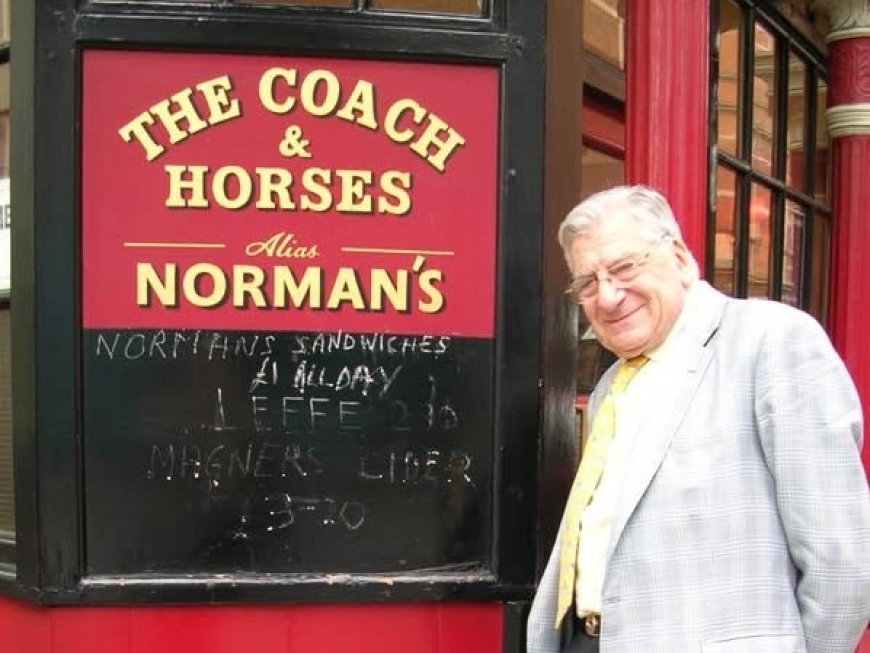

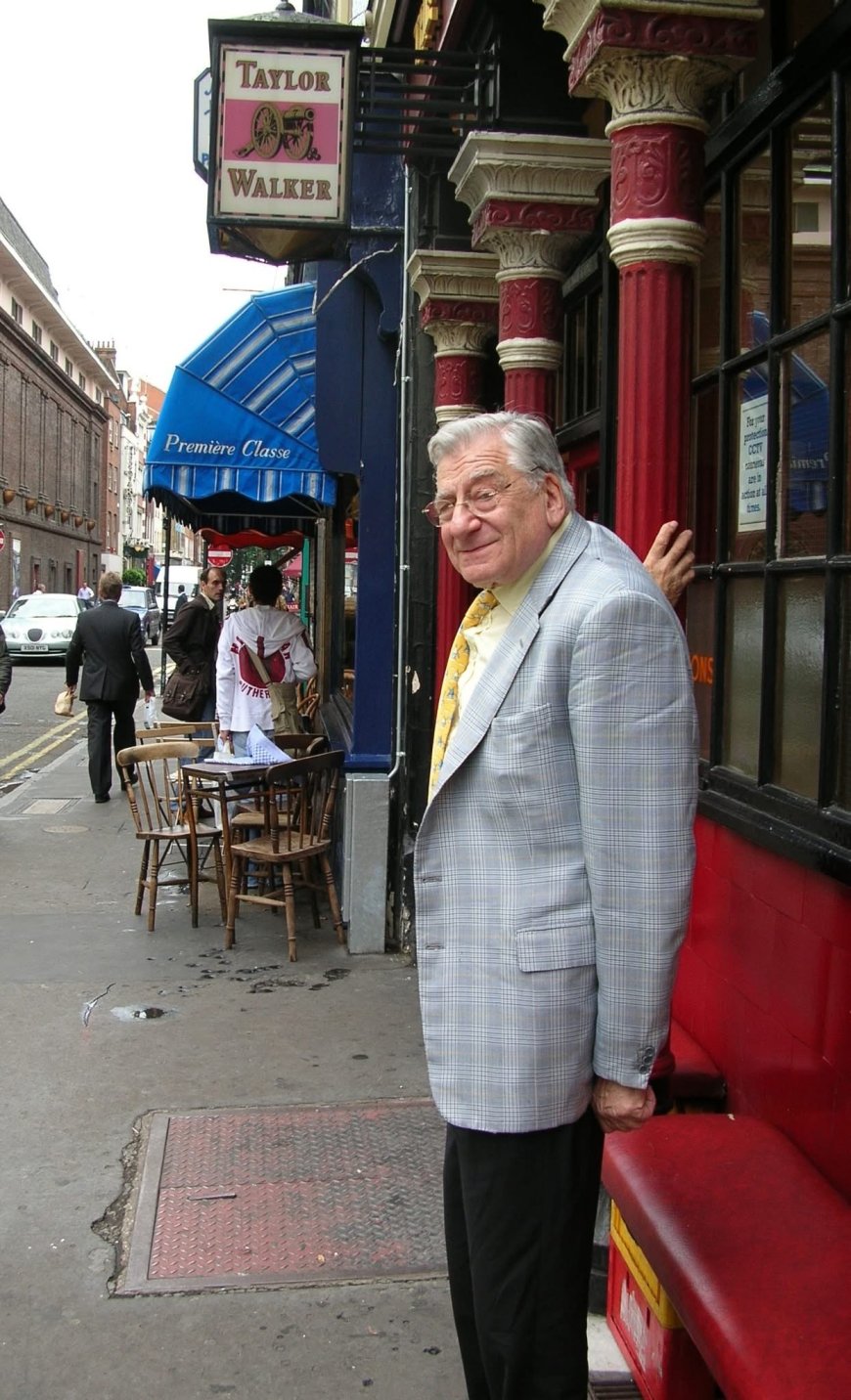
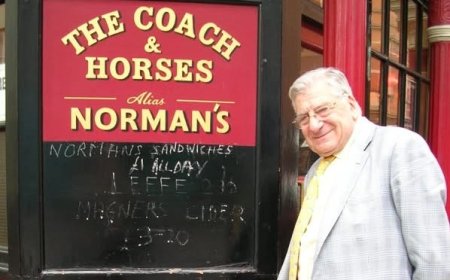
For more than sixty years, Balon stood behind the bar of the Coach & Horses in Greek Street, becoming one of the capital's most recognisable publicans and one of the defining figures of old Soho. Although he became widely known as "London's Rudest Landlord", the nickname only told part of the story.
To many, he was a custodian of a particular Soho spirit: independent, unconventional, witty and fiercely resistant to change.
Balon's association with the Coach & Horses began in 1943 when his father took over the pub. He later assumed the licence himself and spent decades presiding over an establishment that became far more than a place to drink. Under his stewardship, the pub evolved into a celebrated meeting place for journalists, writers, artists, actors and local characters.
The Coach became especially associated with the magazine Private Eye and with journalist Jeffrey Bernard, whose celebrated "Low Life" columns helped immortalise both the pub and its landlord. The venue's reputation was further cemented by Keith Waterhouse's stage play Jeffrey Bernard Is Unwell, which drew heavily on the atmosphere of the Coach and the colourful personalities who frequented it.
Over the years, the pub welcomed an extraordinary mix of customers. Artists including Francis Bacon and Lucian Freud were among those associated with it, alongside journalists, politicians, actors and Soho regulars. It was a place where social distinctions seemed to matter less than character.
Balon's management style was famously uncompromising. He disliked pretension, had little patience for bad behaviour and was known for delivering sharp remarks with impeccable timing. His reputation for rudeness became part of the pub's mythology, attracting visitors from around the world who hoped to experience his wit first-hand.
Yet those who knew him well often described a more complex figure. Beneath the carefully cultivated gruff exterior was a landlord who took a genuine interest in his regulars and who remained deeply committed to the community that surrounded him. Friends and former customers have recalled acts of kindness and loyalty that rarely attracted public attention but left lasting impressions.
His significance extended beyond the walls of the Coach & Horses. Balon represented a generation of Soho publicans whose establishments served as informal cultural institutions. Their pubs provided meeting places where ideas were exchanged, friendships were formed and London's creative life unfolded over countless conversations.
In later years, Balon frequently reflected on the changes that had transformed Soho. While recognising that cities inevitably evolve, he often spoke nostalgically of a district that was once rougher around the edges but rich in individuality. Many who mourn his passing share a similar sense of loss for a Soho that has gradually given way to redevelopment, rising property values and changing social habits.
When Balon retired in 2006, tributes flowed from across London's cultural and media worlds. The affection with which he was regarded demonstrated that his influence reached far beyond the bar he had made famous. He had become one of the district's best-known personalities and, for many, one of its most enduring symbols.
Today, the Coach & Horses remains an important Soho landmark, but it is impossible to think of its history without thinking of Norman Balon. His career spanned an era in which Soho evolved from a post-war bohemian enclave into one of the world's most visited urban districts. Through all those changes, he remained a constant presence.
Few landlords become part of the identity of a neighbourhood. Fewer still become part of its folklore.
Norman Balon achieved both.
His passing is not only the loss of a much-loved publican; it is the loss of one of the last living links to a distinctive chapter in Soho's cultural history. He will be remembered not merely for his famous sharp tongue, but for the character, continuity and authenticity he brought to one of London's most celebrated pubs.
Soho has lost one of its great originals, and London is poorer for it.
Photos by Ian Freeman.